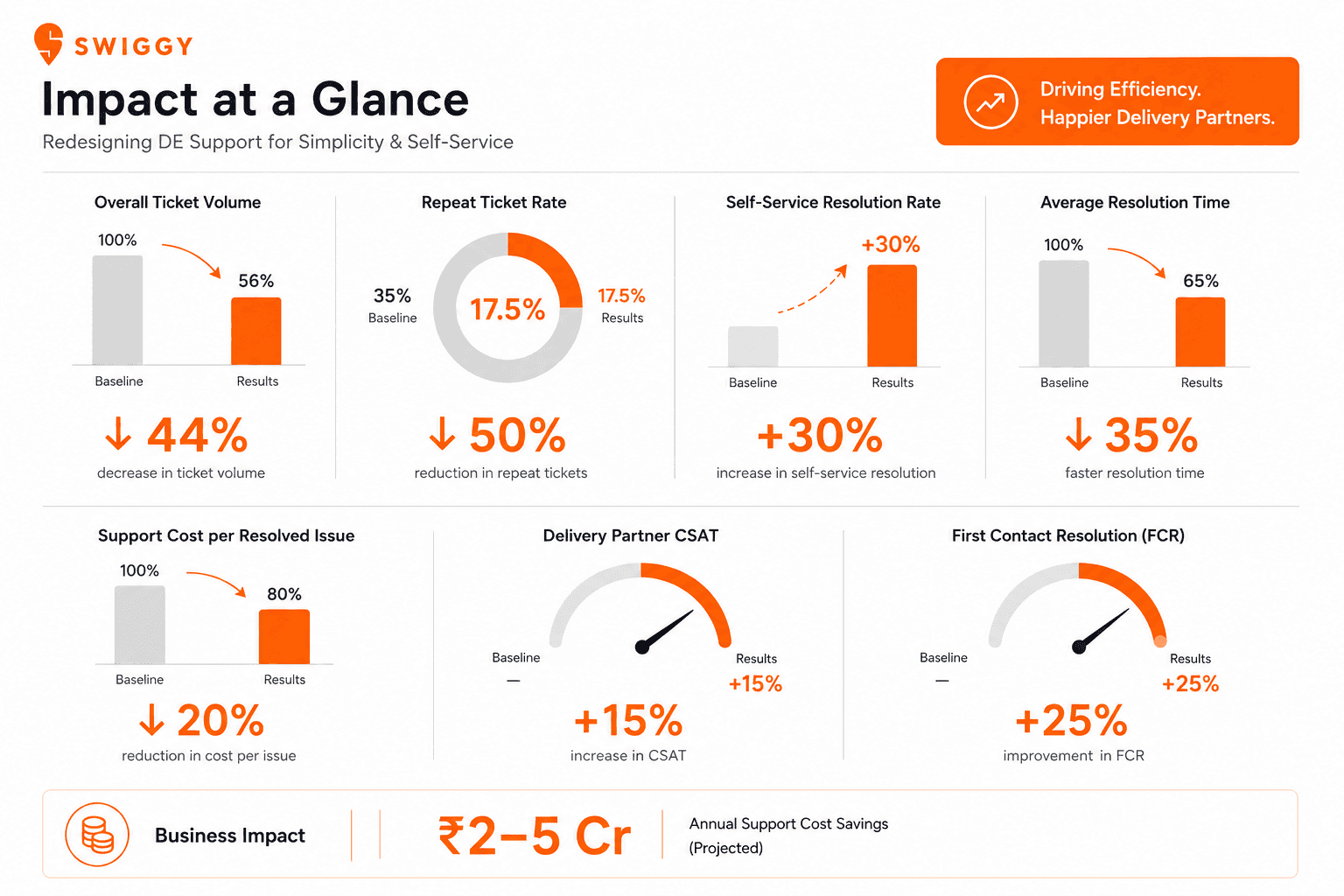
How I Reduced Support Tickets by 23% Through a Self-Service Experience.

Problem
Help & support ticket volume increased by 40% over three months, driving up operational support costs. Nearly 35% of all tickets were repeat requests, indicating that delivery partners were unable to resolve issues effectively through the existing support experience.
Delivery Partner Goal
Enable delivery partners to resolve common issues quickly and independently without contacting support. Provide a simple, transparent, and reliable self-service experience that reduces friction and helps them get back to deliveries faster.
Business Goals
Lower operational support costs by increasing self-service adoption.
Reduce overall Help & Support ticket volume by minimising repeat tickets.
Landing Page Redesign

Outcome: Reduced cognitive load, improved ticket discoverability, and helped minimise repeat ticket creation.
Prioritising High-Impact Flows
After redesigning the Help Centre, we focused on the top three L2 support journeys, which accounted for 41% of all support tickets:
Daily Incentive Issues – 20%
Change Zone – 13%
Unable to Start Duty – 8%
We interviewed delivery partners, analysed support tickets to identify root causes, and redesigned these flows to improve self-service and reduce the need to contact support.
Daily Incentive Flow
Delivery executives (DEs) frequently raised support tickets because they did not receive their daily incentive. Every issue required a manual conversation with a support agent, creating unnecessary friction for delivery partners and increasing the operational workload for the support team.

Solution
Reduced unnecessary steps in the support flow.
Displayed the exact reason for incentive ineligibility upfront.
Allowed users to raise a ticket only if the issue remained unresolved.
Outcome: Replaced a support-first journey with a self-service-first experience.

Change Zone
Problem
The existing Change Shift & Zone flow combined two different requests into a single journey, making it difficult to understand whether a delivery partner wanted to change their shift or delivery zone. This resulted in unnecessary support chats and poor visibility into request status.
Key Insights
13% of support tickets were related to Change Shift & Zone.
Most requests came from new delivery partners (1–2 months).
Delivery partners had to contact a support agent to complete the request.
Rejected requests were closed without explaining why, leading to repeat tickets.
User Research
Interviews with delivery partners revealed three primary motivations for changing zones:
Higher earning opportunities in other zones.
Fewer orders due to traffic or demand in the current zone.
Incorrect zone selected during onboarding.
These insights helped us redesign the flow to make the process more transparent, reduce dependency on support, and address the most common user needs.

Overall Impact